July 4, 1776, was a monumental day for the delegates of the thirteen colonies under British rule gathered together in Philadelphia as the Second Continental Congress. This year we celebrate the 250th anniversary of that fateful day when the text of the Declaration of Independence was formally approved and adopted. We think of this day as the birth of a new nation — and it certainly led to that — but what the declaration did was put the British monarch, and the world, on notice of the colonists’ intention to separate from the crown. It eloquently made the case that, as British citizens living in the colonies, they had been denied a voice in their own governance, treated as though their lives and liberty carried lesser value, and excluded from any shared vision of their future. While these colonies were distinct and separate from one another, the people who had made the journey across the Atlantic Ocean themselves or whose ancestors had come before them were united in their shared mission to now be free and independent.
Several hours after the vote that approved the final wording, John Adams (of Massachusetts), Benjamin Franklin (of Pennsylvania), and Thomas Jefferson (of Virginia) — three of the five delegates who had served on the committee tasked with writing the decisive document — received a new committee assignment. The three men were appointed to create a Great Seal. It was customary in those times for the representative of a sovereign state to affix the official seal on important documents as a means of authenticating the signature. Having a Great Seal for the “thirteen united States of America,” the term used in the Declaration of Independence, to affix to treaties with other nations would be another statement to the world of each colony’s resolve to be independent and that they were undertaking this together.
It took two subsequent committees and another six years before the final design was approved, but the motto that came from the original committee’s work stuck: E Pluribus Unum, a Latin phrase that translates into English as “out of many, one.” In addition to being incorporated into the design of the Great Seal approved in 1782 and still used today, the phrase on its own can be found on U.S. coin currency in circulation. (If you want to see the full design of the Great Seal, check out the back of a one dollar bill.)
What would it take then, and what does it take today, to be “one” while still being “many”?
Strengthening the Union Over Time
It is worth remembering that what we call the American founding was less a unified national awakening than a difficult negotiation among sharply different colonial cultures, each with distinct values, economic interests, and ideas about liberty and order. Counted in the “many” were Puritan Yankees in Massachusetts, “gentlemen farmers” in Virginia, Quakers in Pennsylvania, Scots-Irish settlers who spread from Pennsylvania into backcountry areas of Virginia and North Carolina, plantation owners in the Carolinas who used enslaved people to work their fields, and others. Within a colony you would find those determined to be free as well as those who wished to remain loyal to the king or who hoped to maintain neutrality during the conflict. The genius of the Founders was not that they reflected a unified American character; it was that they constructed a governing framework elastic enough to hold these competing cultures together.
Even before securing their official independence from Great Britain in 1783, the colonies had loosely bound themselves together under the Articles of Confederation. This first agreement was written in 1777, went into effect in 1781, and eventually ratified by all thirteen states. Under the Articles of Confederation, each state held considerable power to govern itself and entered into a “firm league of friendship” with the others “for their common defence, the security of their Liberties, and their mutual and general welfare.”
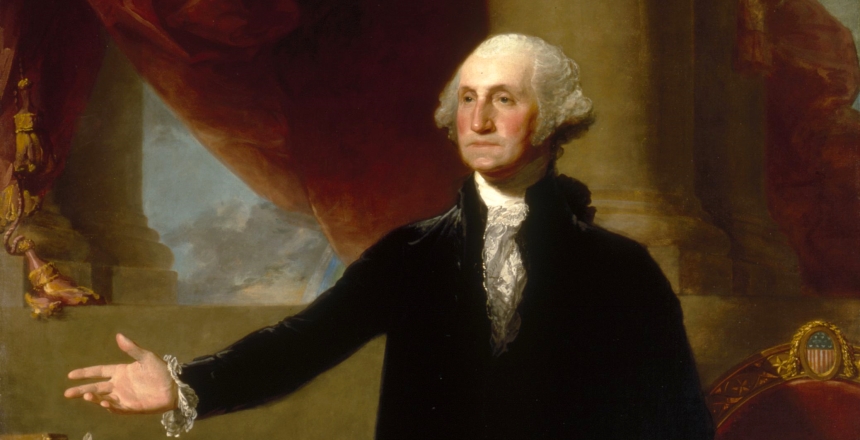
Within a few years, though, it became clear that a different system was needed than a network of sovereign states with their own laws, currency, and commerce. The Constitution that established the federal republic we have today was ratified by enough states in 1788 to put it into effect. The new federal government launched in March 1789 and George Washington was inaugurated as the first president the following month.
What transformed the union into something more durable was the work of subsequent American leaders who cultivated a culture of human connection — articulating a shared national vision, demonstrating over time that all humans are of inherent value, and creating space for diverse voices to be heard within a common story. It was this deepening connective tissue, as much as any constitutional mechanism, that gradually drew distinct and often rivalrous peoples into a productive and increasingly unified nation. We are still a work in progress.
An “Ah-Ha”
At a conference I attended in Washington, D.C., in the aftermath of the terrorist attacks of September 11, 2001, I heard historian David McCullough deliver the keynote address. He reminded the audience that America had faced grave adversity before and would endure again. He recalled a quote attributed to Benjamin Franklin, delivered to his fellow delegates as they signed the Declaration of Independence: "We must, indeed, all hang together, or assuredly we shall all hang separately.”
McCullough’s remarks stayed with me. After that, I read his Pulitzer Prize-winning biography of John Adams. Drawn in, I then turned to other books on the American Revolution, including Gordon Wood’s The Radicalism of the American Revolution and Bernard Bailyn’s The Ideological Origins of the American Revolution.
During this period, I was researching whether there is a best culture for teams and organizations. As I followed the clues that took me into the varied fields of organizational behavior, psychology, sociology, neuroscience, and history, a pattern emerged. Groups achieve sustainable superior performance when their culture meets ten universal human needs: food, shelter, safety, respect, recognition, belonging, autonomy, personal growth, meaning, and progress. When those needs are met, people feel a positive bond of connection to one another and to the work they do in service of others. That bond makes people smarter, happier, more productive, and more resilient in the face of stress. By constrast, without sufficient connection people become more vulnerable to anxiety, depression, addiction, suicidal ideation, and violence. Groups with what I called “Connection Cultures” tended to show higher engagement and alignment, make better decisions, become more creative, and adapt more quickly.
I identified that Connection Cultures have three elements. The first is an inspiring identity: a mission, values, and reputation that unite people in the group. The second element is human value, and by this I am referring to caring about the wellness and wellbeing of all people regardless of rank, role, or background. The third element is knowledge flow, the notion that the best ideas and ways of doing things emerge from a robust marketplace of ideas and opinions. “Inspiring identity,” “human value,” and “knowledge flow” are not especially easy terms to remember so, for simplicity, my colleagues and I began calling them Vision, Value, and Voice.
My focus was the workplace, but to my surprise, I began to see the Connection Culture framework could be applied to groups of all sizes and types, including families, sports teams, communities, schools, social-sector organizations, and nations.
America as a Connection Culture
America’s inspiring identity was initially grounded in the Declaration of Independence, particularly its assertion that “all men are created equal” and “endowed by their Creator with certain unalienable Rights, that among these are Life, Liberty, and the pursuit of Happiness.” That ideal was also reflected in E Pluribus Unum, the motto that captures America’s aspiration to unite diverse people into a single nation. Over time, the nation’s inspiring identity also came to include the idea of America as a land of opportunity.
America’s culture has long reflected a strong respect for human value as it strives to protect people’s lives and freedoms. By purposely separating the federal government into executive, legislative, and judicial branches, the nation reduced the risk of arbitrary and self-serving power that had so often plagued human history under kings and queens, emperors, and dictators. As President Abraham Lincoln said in his Gettysburg Address in 1863, in the midst of the Civil War that pitted American citizens against one another, the nation was “conceived in liberty, and dedicated to the proposition that all men are created equal” and our freedom was for a “government of the people, by the people, for the people.”
America guaranteed freedom of religion, helping to lessen the kind of religious conflict that had devastated Europe. Over its 250-year history, the nation expanded human value further through establishing public education, ensuring a measure of protection from poverty through programs such as Social Security, Medicare, and Medicaid, and enacting legal protections for the civil rights of women and minorities. Actions such as these have helped more people feel connected to the nation.
America strengthened knowledge flow by protecting freedom of speech and freedom of assembly. It also expanded the movement of people and ideas through developing and expanding transportation and communications infrastructure: railroads, automobiles, interstate highways, and commercial flights that connected people in person; and telephones, email, and the internet that connected them remotely.
These three elements of America’s culture of human connection helped fuel the nation’s success. As historian Gordon Wood wrote in The Radicalism of the American Revolution, the young republic rose in just 50 years “from less than two million monarchical subjects…on the very edges of the civilized world” to “a giant, almost continent-wide republic of nearly ten million egalitarian-minded bustling citizens” who had “fundamentally altered their society and their social relationships.” Americans had become, in Wood’s words, “the most [free], the most democratic, the most commercially minded, and the most modern people in the world.”
America’s Ascent to Empire
And now? By nearly every conventional measure of power — economic, intellectual, cultural, and military — America is not merely a leading note. It is the dominant one.
Because of its reach and influence, America can be understood as a modern empire. Today, America represents about four percent of the world’s population yet produces roughly 26 percent of global economic output as measured by GDP. It is home to 28 percent of the world’s largest companies by revenue, and American firms attract roughly 75 percent of global venture capital invested in artificial intelligence, the technology many believe will define the next century. The nation is also a cultural and intellectual powerhouse: Americans have won a large share of Nobel Prizes, American studios dominate global box office revenue, and American universities occupy many of the top spots in international rankings, drawing students and scholars from around the world. Its military maintains a presence in a large share of the world’s nations, a reach without precedent in human history. Historically, America’s presence in foreign countries has not been to exploit these nations, but rather to project America’s power for the purpose of maintaining the post-World War II order that kept major powers from going to war against one another over the last 80 years.
But dominance and flourishing are not the same thing, and a nation’s culture must be judged by both. A Connection Culture asks not only how much a group produces, but whether its people feel a genuine bond to one another, to their work, and to a shared sense of meaning.
A positive bond of connection is essential to sustaining America’s position in the world. The glowing statistics above describe America’s reach, power, and influence. They do not, by themselves, describe its health. On that measure, America’s recent record is more mixed. Rates of loneliness, anxiety, and despair do not track with the nation’s wealth. Trust — in institutions, in neighbors, and in the future — has eroded even as output has grown. Many Americans sense this disparity. Public opinion polls show deep concern about the country’s future.
Historians have shown how the Industrial Revolution that occurred from roughly 1870 to the start of World War I in 1914 disrupted the economic and social order, eroded the legitimacy of existing political institutions, and created a dangerous vacuum that radical ideologies — fascism, communism, ethnonationalism, and religious fundamentalism — rushed to fill. When those movements seized power, the result was catastrophic violence on a scale the world had never seen. Artificial intelligence has the potential to contribute to similar outcomes.
As noted above, since World War II, American leadership has often been a force for peace and stability at home and abroad. Yet declining spiritual and social health, combined with a recent pattern of unilateral military action, coercive diplomacy, and withdrawal from multilateral institutions, raises a serious question: Will America continue to be a force for constructive leadership that serves to unite people, value them as human beings and contributing members of the group, and give them a voice, or will it drift toward the habits of empires of history that conquered, controlled, and often brutalized other peoples?
E Pluribus Unum was never a description of what America was — it was a declaration of what America intended to become. That work is unfinished. Only leaders with the competence and strength of character to intentionally cultivate and maintain cultures of human connection can guide America through this challenging season. And all of us have a role to play in fostering connection.
The 250th anniversary of America's founding is not merely an occasion for celebration; it is a summons to that kind of engaged citizenship — one that, if answered, can help people flourish and carry forward the faith of those who risked everything in Philadelphia.
About the Author
Michael Lee Stallard, MBA, JD, is a thought leader, speaker and leading expert on how human connection in workplace cultures affects the health and performance of individuals and organizations. In addition to Fired Up or Burned Out, he is the primary author of Connection Culture: The Competitive Advantage of Shared Identity, Empathy, and Understanding at Work.
Photo: John Trumbull's painting Declaration of Independence. Public domain. Image has been cropped.

%2C_by_John_Trumbull_860x440_Wikimedia%20Commons.jpg)