“I anthropomorphize disease. I convert it to an evil enemy. I want to slay it, before it hurts friends and family.” Herbert Pardes, M.D.
The late Dr. Herbert Pardes is one of my connection heroes. He died on April 30, 2024, at his home in Manhattan, at the age of 89. This article draws on his memoir to examine the leadership approach that shaped his 11 years running New York-Presbyterian Hospital and the New York-Presbyterian Healthcare System. As background, Pardes trained as a psychiatrist, and his long career also included serving as Director of the U.S. National Institute of Mental Health, U.S. Assistant Surgeon General under both President Carter and President Reagan, and Dean of the Faculty of Medicine at Columbia University College of Physicians and Surgeons.
Dr. Herbert Pardes led New York-Presbyterian Hospital to become one of the top-ranked hospitals in the nation. When he became President and CEO at the start of 2000, the two-year-old entity that had been created through the merger of rivals New York Hospital and Columbia-Presbyterian Hospital was still struggling with turf wars, and annual profits had declined sharply — from $10.4 million in 1998 to $2.5 million in 1999. Adding to the complexity, the merger brought with it two academic programs, Columbia University College of Physicians and Surgeons (affiliated with Presbyterian Hospital) and Weill-Cornell School of Medicine (affiliated with New York Hospital). New York-Presbyterian was a behemoth, with roughly 13,000 employees across its combined campuses. By the time Dr. Pardes retired in September of 2011, New York-Presbyterian's revenue had grown from $1.7 billion in 1999 to $3.7 billion in 2011 and it had nearly 20,000 employees.
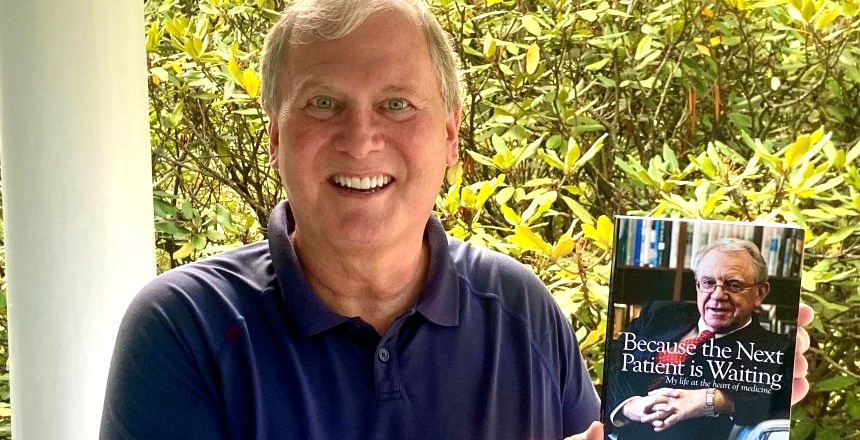
What stood out to me in Dr. Pardes’ memoir, Because the Next Patient Is Waiting: My Life at the Heart of Medicine, is not simply that he achieved excellence — it's how. His account offers a case study in what I call a Connection Culture: an organizational culture built on a compelling Vision, genuine Value of people, and authentic Voice given to every member of the team. Vision + Value + Voice = Connection. Being intentional about pursuing task excellence and relationship excellence produces sustainable superior results. Pardes didn’t use this vocabulary himself, but the pattern is unmistakable throughout his story.
The Origins: Shaped by Childhood Experiences
Before he ever led a hospital, Herb Pardes knew what it felt like to be the vulnerable patient. That experience shaped everything that followed.
At age seven, he was admitted to Brooklyn Jewish Hospital with what turned out to be Perthes disease, a condition that cuts off blood flow to the ball of the hip joint. It was 1942 and the treatment at that time was to immobilize the hip completely: doctors placed young Herb in a plaster cast running from below his shoulder, down his entire torso, and all the way to the toes of his right leg. Picture this: only his head, arms, and left leg were free. He would remain in that cast, replaced every few months, for a total of ten months.
What stayed with him decades later wasn't the physical ordeal itself, but the emotional climate of the hospital ward: the colorless room, the stiff white sheets, and, above all, the long, silent nights with no comforting voice to ease a child's fear. The doctors and nurses, he recalled, were competent but cold, at times sticking him with needles without any explanation of what they were doing or why. Hospital rules limited his parents to visiting for a single hour, a couple of times a week. Even his own mother, not one for emotional comfort, could be heard sobbing as he was wheeled away on the stretcher; the seven-year-old Pardes, remarkably, found himself trying to reassure her rather than the other way around.
A second formative episode came at age twelve, when he woke one night unable to breathe. He was having an undiagnosed asthma attack. Rushed to the emergency room and laid flat on a table, he experienced the terrifying sensation of what felt like a two-ton weight on his chest and the certainty that he was going to die. A doctor administered an injection to dilate his airways, and relief came almost instantly. Pardes described it as one of the most stunning transformations he had ever felt — from certain death to full restoration in the space of a breath. He remembers kissing his father's hand in gratitude.
Pardes himself drew a direct line from these two childhood episodes to his lifelong devotion to medicine. My sister-in-law, an internal medicine physician who trained at Johns Hopkins, likewise traces her drive to go into medicine to experiences she had as a pediatric patient.
But there's a second, quieter lesson embedded in Pardes’ account, one that would become foundational to the culture he later built. He had personally experienced the difference between clinically competent care and emotionally connected care — and he never forgot which one a frightened child (or adult, for that matter) actually needed.
Vision: A Mission People Could Believe In
Pardes didn't lead with a numbers target. He led with a mental picture of what the hospital could become — a place where excellence and compassion were inseparable. As he put it, his goal was for people to say of New York-Presbyterian: this is a place where people care for each other, where great things are happening, and where excellence is pursued at the highest attainable level. He wanted New York-Presbyterian to be “a place where people at other top-tier hospitals and medical schools want to teach, to do research, and, most of all, to provide outstanding care to people who hurt.” His aim was for New York-Presbyterian’s reputation to be one of caring and excellence in the minds of all its constituents — medical personnel, patients and their caregivers, members of the local community, government officials, and leaders in the health insurance industry. Improving the financial health of the organization was important, but it would follow change, not dictate it.
Pardes’ vision combined several threads at once: fixing what wasn't working, building genuine inclusiveness, insisting on empathy in patient care, and pursuing the highest possible standard of performance. Pardes understood something that's easy to overlook: excellence was never pursued for its own sake, but always in service of "the experience of patients."
This is precisely why the vision worked. As Pardes observed, people make sacrifices for a mission when they feel it reflects their own values and aspirations. A vision statement posted on a wall is inert; a vision that people recognize as their own, and internalize, becomes a source of energy. He described this dynamic directly: a fitting vision for an institution raises spirits and builds enthusiasm from within, and when leadership represents values that others admire and want to emulate, it becomes far easier to align a large, disparate group of people around a shared direction.
Pardes was known for putting that vision into blunt, personal terms. He was a New Yorker after all. As he told The New York Times in 2007, "I've never been able to walk past a problem. I've got to fix it. This profession is first about helping patients survive — always has been." That restlessness translated into results. He was, by every account, a prodigious fundraiser, helping secure the donations that built landmark facilities including the Morgan Stanley Children's Hospital, the Vivian and Seymour Milstein Family Heart Center, and the Iris Cantor Men's and Women's Health Centers.
The proof of this alignment of vision and behavior showed up in a striking, concrete way. The hospital's reputation became so strong that hundreds of nurses working elsewhere kept themselves on a waiting list, hoping for the chance to join New York-Presbyterian, even amid a nationwide nursing shortage.
Value: Treating Every Person as Essential
If vision gave people a destination to move toward, valuing people is what made them want to walk there together. For Pardes, the Connection Culture element of human value ran in two directions at once: toward patients and toward staff.
Valuing patients meant leading with empathy rather than procedure. Pardes recounted how he would ask medical students what they might say or tell a patient when they first walked into a hospital room. He would often hear responses that aimed to reassure or ease the patient’s worry. His advice to those in training: Listen first. Begin by inviting the patient to share how they feel and what's on their mind, because you can't discover a patient's real concern without first genuinely opening yourself to listening. Pardes was explicit that empathy isn't a performance — walking into a room and pouring out "manufactured concern" isn't empathy at all.
Pardes liked to tell a story about a cancer nurse whose attitude he deeply admired because it showed a dedication to taking care of others and a willingness to set aside your own needs in that pursuit. The nurse acknowledged that in caring for many patients, there will be some who die. ”When they die, I cry. And then I wipe my face because the next patient is waiting.” For Pardes, this story captured exactly the blend of compassion and expertise he wanted every staff member to embody — not only doctors and nurses, but administrative staff, security guards, and the people who serve food.
Pardes didn't just preach this standard — he modeled it personally. Colleagues recalled that he made a point of visiting patients at their bedsides (not typical of a CEO), insisted that nurses memorize not just patients' names but their families' names too, and had hospital rooms and lobbies repainted from stark, clinical colors to soothing pastel shades. For a man who had once laid for ten months in a plaster cast in a cold, colorless ward, these were not abstract policy preferences — they were corrections to something he had personally experienced as a child and never forgotten.
Valuing staff meant making a consistent effort to single out and praise employees at every level, from top leadership down to the people parking cars in the visitors' lot. Recognition wasn't reserved for physicians alone. This wasn't incidental. Rather, it was a deliberate cultural strategy, built on the belief that excellence, fairness, and inclusiveness are what allow an institution to recruit talented, sensitive people; build morale and trust; and ultimately deliver quality care.
That praise took multiple forms, from private notes of appreciation to public celebration. Nursing staff nominated their most humanitarian colleagues; the hospital held congratulatory assemblies where a nominator would describe the honoree's contribution before the nominee themselves spoke. This practice was done for nurses and physicians alike, ward by ward, floor by floor, as a regular occurrence — not a once-a-year formality.
What made these recognition assemblies especially powerful, in Pardes's own account, was who else was in the room: the honorees' families — spouses, parents, children — filled the space, much like a school graduation. That detail matters. Valuing someone isn't only felt privately; it's confirmed when their contribution is witnessed by the people who matter most to them, which is what turns a workplace recognition into something closer to a genuine celebration of a life well spent.
That same commitment to showing people they are valued is seen in how Pardes handled staff performance issues. He noted that he dismissed very few people during his tenure, reserving that step for cases of egregious behavior or clear failure of duty. His preference, instead, was empathy for someone showing a genuine readiness to improve. His approach was a conscious rejection of the mass firings and "house cleanings" sometimes favored elsewhere in management.
His compassion for others was not a management technique layered on top of his personality; it came from the same place as his own most personal loss. Pardes wrote movingly in his memoir about the death of his sister, Elaine, in 2008, and the grief that never fully faded — tears that still came, he said, whenever he thought of her, even years later. That capacity for grief is also, unmistakably, the same capacity that let him empathize so fully with anyone suffering the loss of someone they loved — patients, families, and staff alike.
Voice: Building Real Mechanisms for Staff to Be Heard
The third element of a Connection Culture — voice — is where Pardes' approach becomes most distinctive. He didn't simply value people privately; he built systems to make sure they were genuinely heard and they could see their input actually change how the hospital operated.
He described creating a formal outlet for every one of the hospitals’ roughly 20,000 employees to raise grievances, ask questions, or make suggestions, with the explicit standard that no detail was too small to discuss. Pardes was candid about why this worked: once the senior leaders asked their colleagues for input, they had to make clear the request was sincere and that the ideas would actually be valued and listened to, not filtered through a top-down hierarchy that only pretended to want feedback. That credibility, once established, took on a life of its own: hundreds of innovations, large and small, came directly from frontline staff and produced measurable improvements in patient care, all in service of a simple, oft-repeated principle: “The patient comes first.” A dedicated grants program went further still, giving staff members funding to pursue projects that addressed problems they themselves had identified.
Regular sessions called "Patient Safety Fridays" brought hospital-wide attention to safety issues. Local councils formed voluntarily across the hospital locations, made up of the people actually working on the wards, who reviewed procedures, examined recent cases, identified weaknesses, and proposed fixes — a model that interns and residents adopted for themselves as well, forming their own quality-control groups.
The Throughline
Together, these three Connection Culture elements form a coherent whole: a vision ambitious and human enough that people wanted to belong to it, a genuine valuing of every person's dignity and effort regardless of title, and structures that gave people real voice — to be heard, seen, and celebrated by their peers and their families both.
Pardes summed up the underlying conviction simply: caring for the sick gives meaning to one's life, offering something positive to look forward to each day, and bringing out what's most exemplary in human character. That conviction, translated into the daily practice of leadership, is what built a Connection Culture strong enough to make New York-Presbyterian a hospital where hundreds of waiting nurses wanted to work — and where the people already there felt, every day, that they were part of something worth their best effort.
The proof that this culture had taken root, for Pardes, wasn't found in a survey — it was found in the hallways. Walking the wards himself, he'd regularly receive unprompted, heartfelt testimonials from employees, offered with no encouragement or provocation on his part. That, more than any metric, told him the hospital's culture had become something different from what it had been before his team arrived — it had become, in his words, part of the lifeblood of the place.
The external validation followed the internal culture. Throughout Pardes' tenure, U.S. News & World Report consistently placed New York-Presbyterian among the nation's top ten hospitals on its prestigious "Best Hospitals" Honor Roll — an outside confirmation, year after year, of what the people inside the institution already knew to be true.
“If I had to define leadership, I would say it’s the ability to take people to a place that they might not go without you,” observed David Komansky, former CEO of Merrill Lynch and member of the New York-Presbyterian Board of Trustees. “I think Herb has that ability.” Thomas M. Priselac, president of Cedars-Sinai Health System in Los Angeles, said this in a 2007 article in The New York Times on Pardes’ leadership impact: “Herb recognized the cultural differences between the two organizations, preserved the best of each predecessor, while simultaneously creating a whole new organization. That was not an easy thing to pull off.”
In this article, I’ve mentioned only a few ways in which Pardes incorporated the elements of vision, value, and voice as a leader. In his memoir, you can read how all three came into play in how he addressed the very understandable concern staff felt early on about integrating two independent hospitals along with two academic medical programs. Pardes was committed to demonstrating even handedness, not favoritism. By way of example, he wrote about the particular issue of whether a given department at each hospital would remain independent or they would be consolidated into one. He reassured staff that consolidation would not happen automatically or be solely determined by senior leadership. “We’ll talk about it,” [he] told the faculties, “and we’ll merge where and when, in consultation, we collectively decide it is advantageous to do so.” He knew the importance of explaining proposals, and laying out the logic in the discussion phase. For instance, in some cases, having one streamlined and collaborative department would be a positive for medical students, interns, and residents who could then train with faculty from both programs, enhancing their education.
Pardes stepped down as president and CEO in September 2011, after eleven years leading the hospital, but remained closely involved with the institution for the rest of his life. Kenneth Raske, president of the Greater New York Hospital Association, remembered him as someone who “met life's problems with a childlike grin and a touch of… humor” — a fitting image for a leader whose entire philosophy of care was rooted in treating people, staff and patients alike, as full human beings rather than roles to be managed. That philosophy — vision, value, and voice, lived out daily — is the legacy he leaves behind.
Dr. Herb Pardes was a remarkable man and leader. It helps round out one’s understanding of him to see videos of Dr. Pardes in action, to hear him in his own words, and to hear how people around him described the man. I encourage you to watch this inspiring tribute to Dr. Pardes by the Brain and Behavior Research Foundation.
About the Author
Michael Lee Stallard, MBA, JD, is a thought leader, speaker and leading expert on how human connection in workplace cultures affects the health and performance of individuals and organizations. In addition to Fired Up or Burned Out, he is the primary author of Connection Culture: The Competitive Advantage of Shared Identity, Empathy, and Understanding at Work.